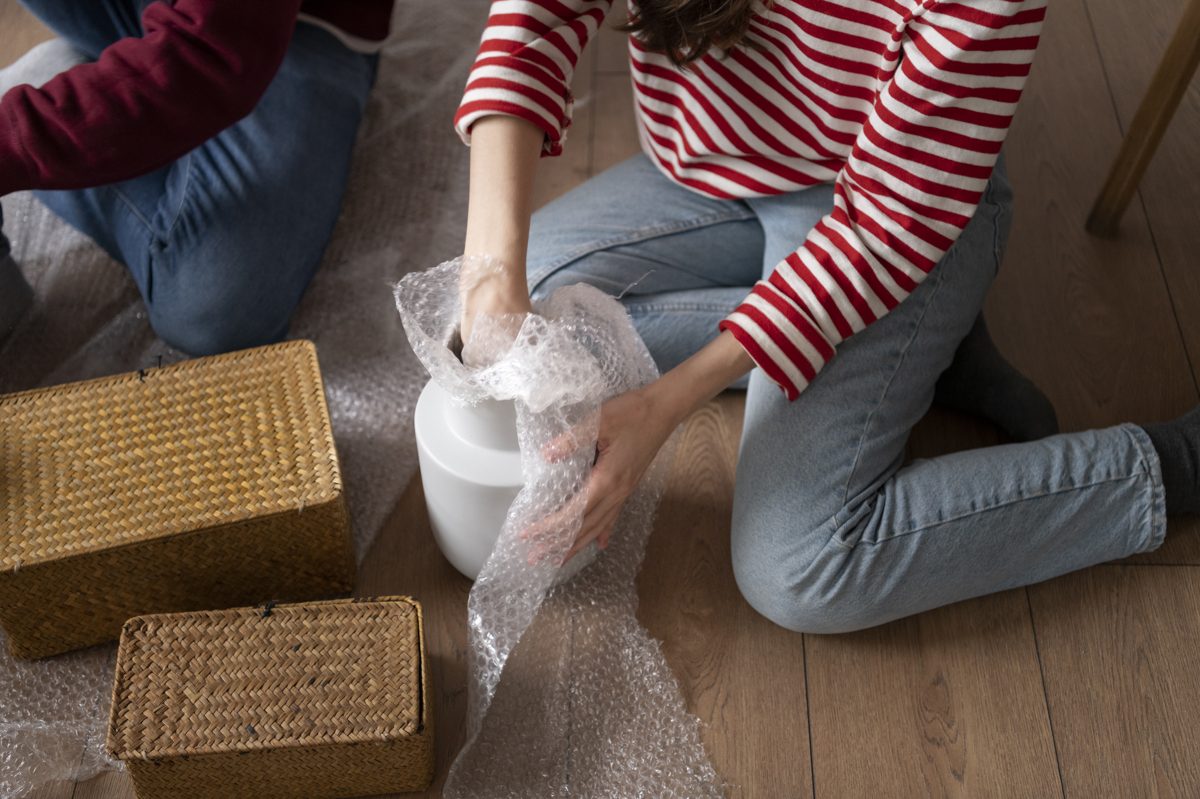
Breakage almost never happens because a box was dropped. It happens because the contents moved inside the box while the truck was moving. Fragile packing comes down to removing that space, using a carton rigid enough to hold its shape under load, and setting each item on the axis where it is strongest. We run full and partial packing in Manchester and across the rest of New Hampshire most weeks of the year, and a short list of the same mistakes accounts for most of the damage we see.
Movement Inside the Box Is What Breaks Things
A loaded truck travels for hours over road seams, patched asphalt, and the frost heave that shows up every spring once the ground starts letting go. Everything inside vibrates the whole way. A plate with half an inch of free space around it taps against its neighbor several thousand times between Manchester and the Seacoast, and the chip that results has nothing to do with how anyone carried it.
Packing paper is not padding in the decorative sense. It works as a wedge. Crumpled paper at the bottom, between every item, and filling the top until the flaps need pressure to close is what turns a box of loose objects into one solid mass. A well packed carton makes no sound when you shake it gently. That silence is the test, and it takes about two seconds to run. Since running short on paper is what produces underpacked boxes in the first place, work out your box counts by home size before you start buying supplies.
Dishes Stand on Edge and Glasses Stand Upright
Plates stacked flat fail under their own weight the moment the load shifts. Standing them vertically on edge, like records in a crate, puts the force along the strongest axis of the plate instead of across the weakest. Each plate gets wrapped on its own, then the stack goes in on edge with paper packed firmly down both sides so nothing can tip.
Glassware and stemware go upright, never on their sides. Crumple paper into the bowl of each glass first, then wrap the outside, with attention on the stem, which is where almost all stemware damage happens. Use a dish pack rather than a standard carton. Dish packs are double walled, and that difference shows once four or five boxes are stacked above them.
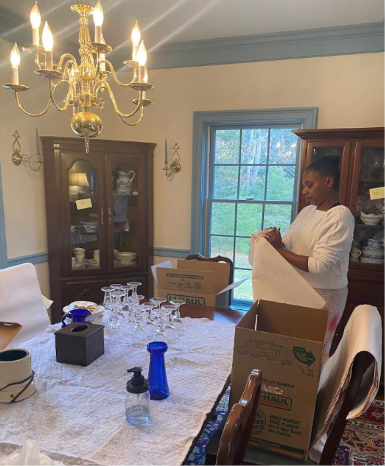
Heavier pieces sit at the bottom, lighter at the top, and no fragile carton should be loaded heavy enough to become awkward to carry. A box that strains the person holding it is a box more likely to be set down hard.
- Wrap each piece on its own, never two together in one sheet
- Line the bottom of every fragile carton with two to three inches of crumpled paper
- Fill horizontal gaps before vertical ones, since sideways movement does the damage
- Top off until the flaps meet under light pressure, with no hollow left underneath
- Mark fragile on the top and on at least two sides, since the top disappears once boxes stack
- Keep each fragile carton light enough to lift comfortably with one arm underneath
Art, Mirrors and Anything Flat
Flat items fail at the corners and across the face, so both need their own attention. Corner protectors take the impact that would otherwise travel into the frame, and a rigid mirror carton or a custom crate stops flex across the middle. A blanket on its own is not enough for anything framed under glass, because a blanket prevents scuffing and does nothing about flex.
Glazed artwork benefits from tape applied across the glass in an X before wrapping. If the glass breaks anyway, the tape holds the pieces together instead of letting them travel into the artwork. Original art, anything with real value and anything irreplaceable earns a custom crate rather than a carton. Flat items then ride standing on edge in the truck, never laid down and never with weight on top.
Would rather hand over the kitchen, the china cabinet and the art? Ask us to quote packing for those rooms only, so you pay for the part you did not want to take on.
Electronics Need Their Own Approach
Electronics break differently. The risk sits less in impact and more in static, moisture, and connections that work loose over a few hours of vibration. Original boxes are the best option when they still exist, since they were built around the exact shape of the item. Where they are long gone, a snug carton with rigid padding on all six faces does the same job.
Photograph the back of anything with more than two cables before unplugging it. That photo saves far more time than it costs. Take out discs, cartridges and anything that moves inside a drive. Televisions travel upright and never flat, because a screen laid horizontally flexes across its own weight. Loose cables go into labeled bags rather than loose in the box, where connectors scratch screens and finishes. If you are working through the house in order, our guide to packing a move room by room covers where electronics fall in the sequence.
Loading Order Decides What Survives the Drive
Good packing can still be undone in the truck. Fragile cartons go on last and come off first, placed high in the load and never under furniture or heavy boxes. Our crews tier a load so the weight sits low and the breakables ride above it, which keeps the pressure off the cartons that cannot take it.
That order matters more the longer the drive runs. A short hop across town gives a load little time to settle, while a Route 101 run to the coast or a few hours heading south puts continuous vibration through every box on the truck. Anything fragile that rides under weight for that long arrives having been slowly compressed the entire way.
Buy more paper than you think you need. Running short halfway through the kitchen is what produces the underpadded boxes that break, and unused paper costs very little next to a broken set of dishes.
Tell us which rooms worry you most. Call (603) 288-9627 or email info@eammoving.com to talk through a move in Manchester, NH, or anywhere else in the state, and we’ll price packing those rooms specifically. We’re open seven days a week, 7 AM to 9 PM, and you can contact us anytime. We’re happy to walk through whatever’s on your list.
Related Topics:
Ready to plan your move?
Get a free, no-obligation quote from a real person — usually within the same business day.
 Book Now